

The Kind Lie: When Fibbing Is the Honest Choice
 Savannah DiMatteo
October 18, 2026 · 5 min read

I told my mother her purse was in the car. It wasn't. She'd lost it weeks ago, and I'd replaced everything quietly, but she was looking for it with that rising panic, and the truth was going to start a fight neither of us could win. So I said the purse was safe, and she stopped looking.
I felt sick about it for three days.
When the truth causes fresh pain someone with dementia can't process and the fib protects their peace, yes, it's OK. Clinicians call it therapeutic fibbing, and it's about their comfort, not your convenience.
The line matters, but first, the permission.
What is therapeutic fibbing?
Therapeutic fibbing is a communication strategy where you enter the reality of someone with dementia instead of correcting them into yours. Their brain can't always come to the present, and dragging them there by force just hurts them without teaching them anything.
The Alzheimer's Association's communication guidance points the same direction: don't argue, don't try to convince them they're wrong, don't insist on facts their brain can't file. When correcting someone re-triggers grief or fear as if it's the first time, a gentle fib becomes the kinder path because it protects them from pain that feels brand new every single time.
Whose reality wins? Theirs does, because dementia has already decided they can't live in ours.

Examples: what a kind fib sounds like
Knowing the theory helps. Hearing the script helps more. Here's what fibbing sounds like when the alternative is fresh pain every single time.
When she asks for someone who died
Brutal-truth version: "Dad died two years ago, Mom. We went to the funeral. Remember?"
Kind fib: "He's resting right now. Let me show you this picture of the two of you."
She doesn't need to relive the loss because she needs the feeling of him safe somewhere, and that's what the fib gives her.
When he wants to go home (and he's already there)
Brutal-truth version: "You are home. This is your house. You've lived here for thirty years."
Kind fib: "We'll head home soon. Let's have some tea first."
The "home" he's asking for isn't the address but a feeling, a time, a version of his life his brain still holds. You can't correct him into the present, but you can sit with him until the need passes.
When she insists she needs to get to work
Brutal-truth version: "You retired fifteen years ago. You don't work anymore."
Kind fib: "Your boss called and said to take the day. You've got the morning off."
Her brain is living in a timeline where work still exists, and meeting her there costs you nothing while saving her the confusion of a life she doesn't recognize.
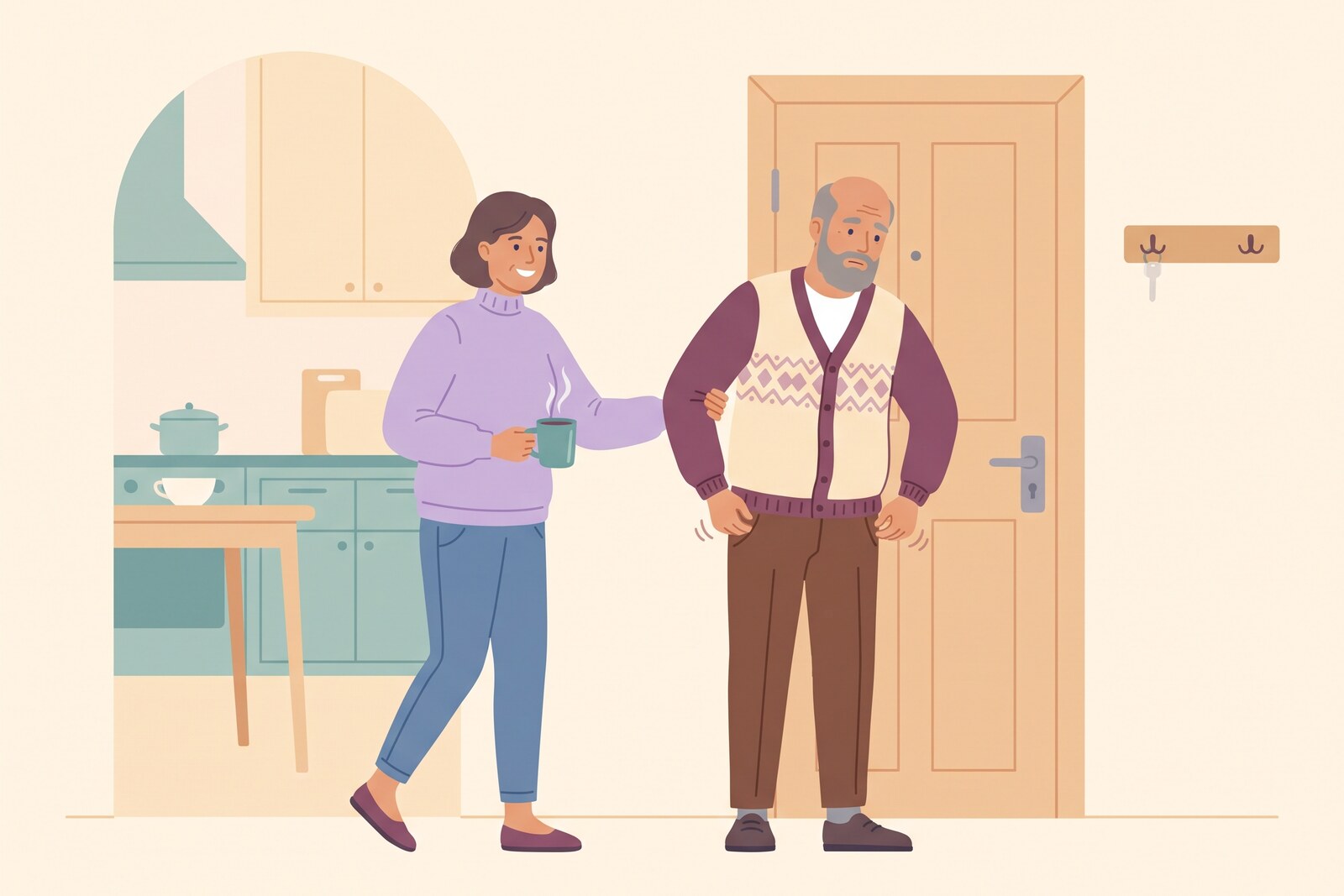
When he looks for the car keys
Brutal-truth version: "You can't drive anymore. The doctor said so. We took your license."
Kind fib: "The car's in the shop. I'll take you wherever you need to go."
Safety isn't negotiable, but shame isn't required either.
If you want the deep well on this, Jolene Brackey's Creating Moments of Joy has been teaching families how to step into their person's reality for nearly three decades.
Where's the line?
Not every fib is therapeutic, and some are just easier for you. Here's the test.
Who is this lie for?
A fib that keeps him calm when he asks about his long-gone mother is for him. A fib that says you'll visit tomorrow when you know you won't is for you. One protects their peace, and the other protects your schedule at their expense.
Safety and medical facts don't bend.
You don't fib about medication, symptoms, or whether they need to see a doctor. You redirect, simplify, or work around resistance, but you don't lie about the things that keep them alive.
Consistency matters.
If you tell her that her sister is on vacation, everyone else in the house needs to say the same thing. Conflicting stories create confusion and erode trust. Pick one script. Stick to it.
The family meeting kit is a free printable. It gives you the structure to talk it through and come out with a story that holds across the whole house.


Why it feels awful anyway (and what to do with that)
Even when the fib is kind, it can feel like betrayal. You were raised to tell the truth, and now you're lying to someone who trusts you.
That sick feeling is grief, not proof you're doing it wrong.
The relationship you had was built on honesty, and dementia has rewritten the terms. Mourning the fact that truth now causes harm is real grief, and you're allowed to feel it.
You're also allowed to keep fibbing.
The guilt doesn't mean the choice was wrong because it means you remember who she was before her brain couldn't hold the facts. That memory is yours to keep, and the fib is hers to live in.
If the weight of it is crushing you, the two-minute check-in can help you figure out what needs tending first.
Understanding why her brain can't see its own gaps in the first place makes the fibbing feel less like lying and more like translation.
And if you're snapping after the tenth loop of the same question, that's not a character flaw. That's what an empty tank sounds like.

Frequently Asked Questions
Should you correct someone with dementia?
Not when the correction causes fresh distress or confusion. If your dad says he needs to pick up the kids from school and those kids are fifty now, correcting him pulls him into a reality his brain can't hold. The kinder move is to redirect gently or enter his timeline for a moment.
What do I say when she asks about someone who died?
You have options. Some caregivers say the person is at the store, visiting a friend, or resting. Others keep it simple and redirect to a memory of that person instead of explaining the loss again. The goal is to protect her from grief she'll experience as new every single time.
Is therapeutic fibbing recommended by doctors?
Yes. The Alzheimer's Association and dementia-care clinicians support therapeutic fibbing as a compassionate communication strategy when the truth would cause unnecessary pain or agitation. It's not about deceiving someone. It's about meeting them in their reality when their brain can't come to ours.
What if family members disagree about fibbing?
Get everyone on the same page before the moment happens. If one person says mom's husband is at the store and another says he died six years ago, it creates confusion and distrust. Pick one script together and stick to it. Consistency protects the person you're caring for.
*These statements have not been evaluated by the Food and Drug Administration. This product is not intended to diagnose, treat, cure, or prevent any disease.
Keep reading
All articles
Next article
I Thought Resting Meant I Was Failing
The guilt goes off when you rest, when you ask for help, when you take an hour. It sounds like proof that you're fa...
6 min read
Read
Previous article
I Don't Recognize Myself Anymore
You catch your reflection between giving pills and making lunch, and you don't recognize the face looking back. Whe...
8 min read
Read
Sleeping With One Ear Open
Why caregivers can't sleep even when exhausted: the one-ear-open problem, what guard-duty sleep does to you, and wh...
7 min read
Read