

Sleeping With One Ear Open
 Jakub Grajewski
November 1, 2026 · 7 min read

The monitor sits on the nightstand. The phone is faceup next to it, volume on high. The bedroom door stays open so you can hear the hallway. You lie down at midnight, maybe one, and your body does not believe you're off duty.
You know every creak in this house. The sound the bathroom door makes when it swings open. The hum of the fridge cycling on. The difference between the radiator ticking and footsteps on hardwood. You catalog them without deciding to, and you wake to check each one.
Morning comes and you've been in bed for seven hours. It doesn't count.
Why can't I sleep when I'm this tired?
When a caregiver can't sleep at night even after years of exhaustion, the body is doing exactly what it trained itself to do. It learned that nights are shifts, and it won't stand down just because you're horizontal.
After months or years of waking to help someone to the bathroom, respond to a fall, or check the locks after wandering, your nervous system adapted. Sleep became surveillance. You trained yourself to stay alert for sounds, for movement, for the absence of sound when there should be breathing on the monitor. Now the training holds even when the threat is low.
This is called hyperarousal. Your cortisol stays elevated when it should drop. Your muscles don't fully release. The part of your brain that listens never clocks out. You're tired and wired all at once, and the exhaustion doesn't override the vigilance.
Your body is treating sleep like a post you're still guarding.

One ear open: what guard-duty sleep is
You don't sleep the way other people sleep.
The monitor glows on the nightstand. You check the camera feed before you close your eyes, and again at 2am when you wake without knowing why. You've learned the rhythm of their breathing, the sound of the bed shifting, the particular scrape of a walker on the floor. You wake to investigate sounds that wouldn't register to someone whose nights belong to them.
Even when you're asleep, part of you is on call.
You might drift under for an hour, maybe two, and then the slightest noise pulls you back. A cough. A door. The neighbor's car starting at 5am. The house settles and you're awake, checking, listening, running through the list of what could be wrong before your eyes focus.
I sleep like a smoke detector. Always listening, never fully off.
And if you do fall into a deeper sleep, you wake up panicked. Did you miss something? How long were you out? You reach for the monitor before you're fully conscious.
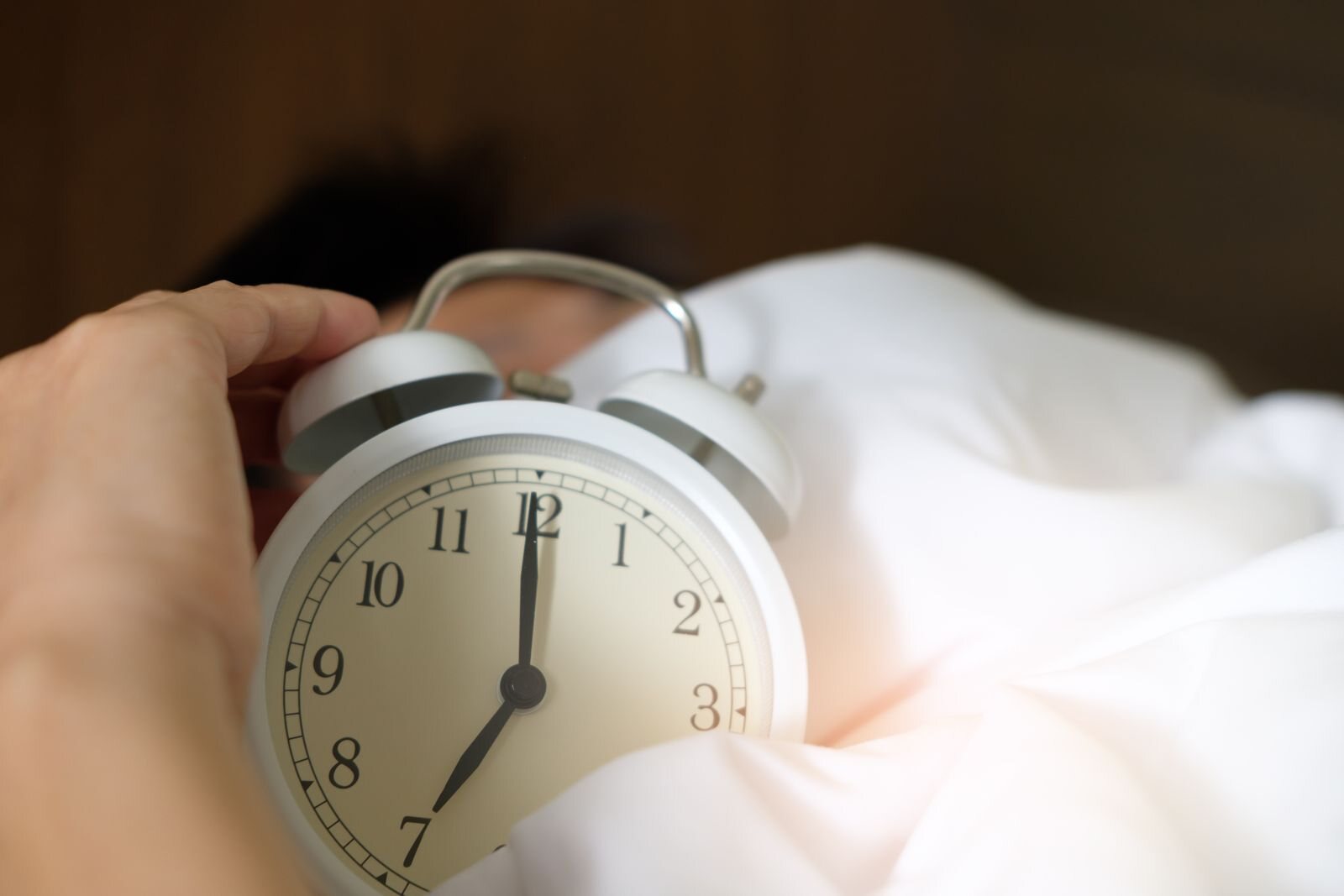
There's a reason new parents talk about losing sleep for years after the baby outgrows the crib. The body doesn't forget what it was hired to do just because the job description changed. Nine years in, I still wake at the sounds my wife used to make right after the stroke, even though she hasn't made them in years.
What years of it does
Broken sleep and short sleep look different. The body treats them the same way.
The NIH's sleep deprivation research documents what living on fragmented rest for months or years does: slower thinking, impaired memory, weakened immune response, higher inflammation, more strain on the heart. Your body repairs itself in the deeper stages of sleep. If you never reach them, the repairs don't happen.
You see it in the daytime fog. Forgetting why you walked into a room. Losing words mid-sentence. Needing to reread the same insurance form three times. Your brain needs sleep to consolidate memory and clear waste. When it doesn't get that, the fog moves in.
You see it in the fuse that's shorter than it used to be. When you snap at the tenth question in a row, part of that is exhaustion. Sleep-deprived people have less access to the part of the brain that regulates patience. The irritability is a symptom, the same as the fog.
And you see it in the load that never lightens, because rest that doesn't restore isn't rest.
Years of this leaves a mark. No human system was built to run on guard-duty sleep indefinitely.


What helps that isn't a sleep-hygiene lecture
Most advice about sleep assumes your nights belong to you. Put your phone in another room. Keep the bedroom cool and dark. Wind down with a book and herbal tea.
That advice was written for someone whose biggest sleep disruptor is their own scrolling habit. It doesn't account for the monitor that has to stay on, or the door that has to stay open. Someone's safety depends on you hearing them. That part doesn't relax.
So here's what actually helps when you can't fix the job itself.
Protect the first 90 minutes. If you can only get one uninterrupted block of sleep, make it the first one after you lie down. That's when your body does the most restorative work. If someone else can cover that window, even a few nights a week, take it. One real night off beats seven half-nights.
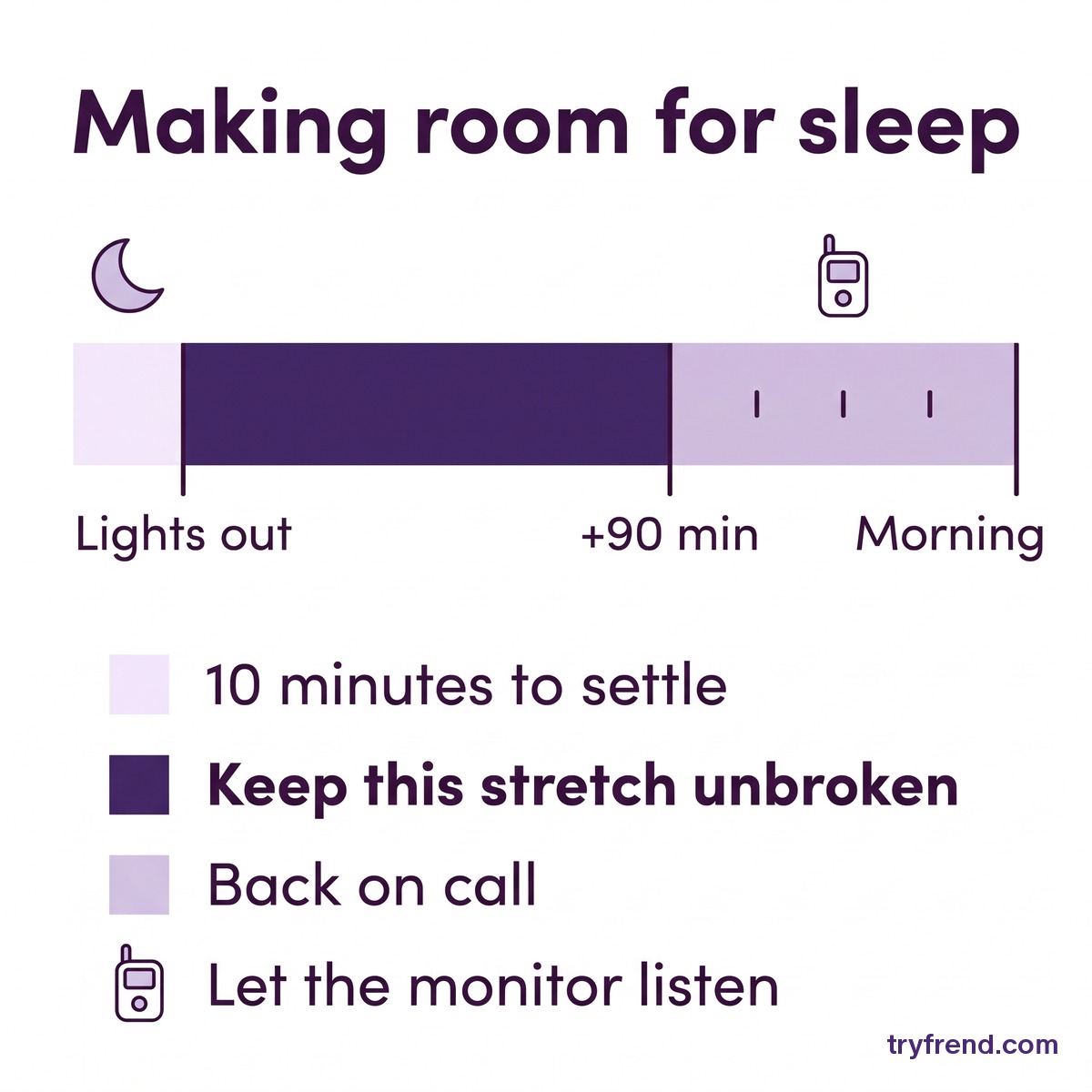
Offload the listening where you can. Monitors, bed alarms, motion sensors: they don't fix the problem, but they let you shift some of the vigilance to a device. You'll still wake up, but you might wake to a sound that actually matters instead of every creak in the house.
Wind down knowing you're still on call. The advice to put your phone away assumes you can. You can't. So instead of pretending you're off duty, acknowledge that you're not, and give yourself a 10-minute landing. Sit on the edge of the bed. Write down tomorrow's list so it stops looping. Let your body know you're lying down but not abandoning your post. Sometimes that permission is enough to let you drift.
Talk to a doctor if you can't fall asleep even when you have a window. If you're lying awake for hours while someone else covers the night, or using alcohol or pills to force sleep, the vigilance has outlasted its usefulness. That's worth a conversation. Sleep deprivation is a health risk. Treating it isn't a luxury.
And be honest about what won't change while the job continues. Some nights will be up, down, up, down. Some mornings you'll wake up more tired than when you lay down. The job comes with that.
The list needs somewhere to live besides your head. The caregiver binder keeps the meds, the numbers, and the week in one place. Free to print.

The nights that give something back
Not every night will be restorative. But some will be better than others, and you learn to work with what you have.
The nights where someone else takes the monitor, even for a few hours, and you sleep without listening. The nights where you make it to morning and realize you only woke once. The morning where you feel a little less fog and remember what it's like to think clearly.
Those nights don't erase the broken ones. But they remind you that sleep is still possible under the right conditions. Sometimes the conditions can be built, even if they can't be permanent.
If your nights feel like an endless loop and you're not sure where to start, the two-minute check-in asks a few questions about your nights and starts you somewhere small.
And if the problem isn't the sounds that wake you, but the mind that won't stop running the list, that's its own note.
The sleep you're getting isn't the sleep you need. That's the job's fault, not yours.
Frequently Asked Questions
Why do I wake up at every sound?
Your nervous system learned that sounds at night might mean something is wrong. After months or years of responding to falls, wandering, or calls for help, your body stays alert even when you're lying down. Guard-duty mode is an adaptation to a job that doesn't clock out.
Is broken sleep as bad as no sleep?
In some ways, yes. Sleep that's constantly interrupted doesn't let you reach the deeper stages where your body repairs itself and your brain consolidates memory. Sleep research links chronic fragmentation to impaired immune function, slower thinking, and low mood. Eight hours in bed doesn't always mean eight hours of rest.
How do other caregivers handle nights?
Most don't sleep through them. They use monitors, bed alarms, or motion sensors to offload some of the listening. Some rotate nights with another family member or a paid aide so they get one full night off per week. Others accept that sleep will be broken and plan the day around the gaps instead of fighting them.
When should I see a doctor about sleep?
If you can't fall asleep even when you have a window of safety, if you're relying on alcohol or sleep aids nightly, or if daytime exhaustion is affecting your safety behind the wheel or your ability to make decisions, talk to your doctor. Sleep deprivation is a health risk.
*These statements have not been evaluated by the Food and Drug Administration. This product is not intended to diagnose, treat, cure, or prevent any disease.
Keep reading
All articles
Previous article
I Thought Resting Meant I Was Failing
The guilt goes off when you rest, when you ask for help, when you take an hour. It sounds like proof that you're fa...
6 min read
Read
I Don't Recognize Myself Anymore
You catch your reflection between giving pills and making lunch, and you don't recognize the face looking back. Whe...
8 min read
Read
Saffron vs Melatonin: Which Helps Which Problem?
Saffron vs melatonin for sleep: how they work differently, who each suits, and why the groggy-morning problem sends...
2 min read
Read