

Why You Keep Snapping at the Person You Love
 Savannah DiMatteo
August 30, 2026 · 9 min read

It's 6:14pm and you just snapped at her for asking the same question she asked six minutes ago. Your voice came out sharp. She looks smaller now, confused. You're standing in the kitchen with your hands on the counter, breathing like you ran a mile. She's already forgotten. You never will.
You came here expecting to be told you're a monster.
You're not a monster. What you heard in your voice was an empty tank, not your character.
Why do I keep snapping?
Because patience is a resource, not a virtue, and yours is being drained around the clock without refill.
You didn't lose your temper because you're mean or broken. You lost it because you've been answering the same question fifteen times a day, running on four hours of sleep, and holding the entire plan in your head with no backup.
The forums are wall-to-wall with it. "I yelled at her because I'm exhausted." "I am so mean to my elderly mother and I feel awful about it." "I snapped at my dad, getting frustrated that I need to do everything here." One caregiver wrote: "I was a CNA. I cared for complete strangers with patience and compassion… so why couldn't I reach my own mother?"
Because strangers got the version of you that had eaten lunch and clocked out at five. Your mother gets the 6pm version, the one who has been up since before dawn and goes back on again tonight.
About 53 million Americans are doing this job right now.
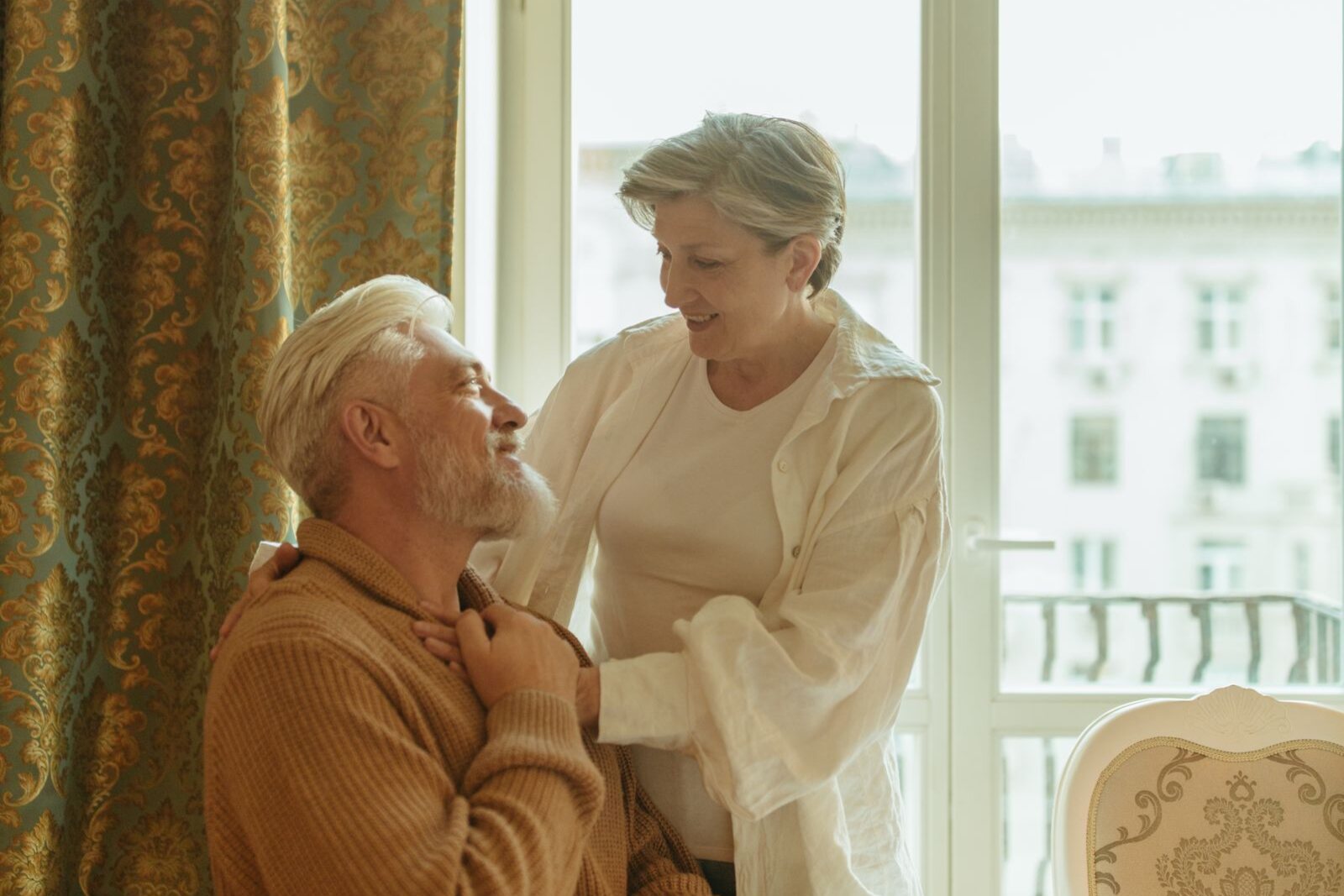
The doctor appointment you've rescheduled twice and then cancelled. The back that stopped forgiving you after that transfer you did wrong in June. Your prescription that ran out in March and you still haven't called it in because her refills come first.
And somewhere in the middle of year three or year seven or year nine, there's a morning when you realize you're not her daughter the way you were. You're the scheduler who reads the discharge papers and calls the insurance company and knows which pills go down easier with applesauce. The snap lives in that gap.
The anger isn't new and it isn't rare. The role arrived fast for some of you, after one crisis that turned you into a caregiver before anyone asked if you were ready. You took it on because someone had to, not because you chose it freely. Whether you've been doing this for two parents at once, or a spouse and kids who still need you, the depletion is the same.

What is the snap actually made of?
The fifteenth repeated question is never just the question.
It's the question plus the sleep you didn't get because you were listening for her door. Plus the fact that you used to have hobbies and now you have a pill organizer and a stack of HIPAA forms. The week repeats. Every day shifts under you.
And then she asks again, and something breaks.
The anger often lands somewhere other than her. The insurance company you fight every week holds some of it with the hold music, the denial letter and the form they made you fax twice. A health system treats your work like it's invisible while you do what a nurse does, time the medications and track the symptoms.
Nobody trained you for this. You learned it in a hospital hallway and on the internet at two in the morning, getting it wrong first.
The job that wouldn't bend, or the one you had to leave, and the paycheck that left with it. The work is unpaid and the programs turn people away based on rules that were written for someone else's situation.
The brother who hasn't called in two months, the cousins who send their love, the family that went quiet. The friend who stopped inviting you because you cancelled three times, and now the gap is too wide to cross.
People say have you tried a binder, have you tried asking for help, have you tried just taking a break, like the problem is that you haven't thought of it yet.
And none of that has a face in the kitchen at 6:14pm. She does.

You can't plan tomorrow because tomorrow is decided by someone else's body. The big plans are gone, but so is the middle of an ordinary Tuesday. The appointment you finally made for yourself and then gave away because she needed you and there's no second option. Some caregivers are doing this with help. A sibling who takes one evening a week, a neighbor who checks in. It helps and it's not enough. Some help and actual relief are two different things.
"I snapped too. What's haunting me now is that when he started trying to pull himself back into the wheelchair on his own, part of me felt satisfaction watching him struggle."
That's someone who's been holding everything together with no help, finally reaching the edge of what a person can do. The fact that you notice the feeling, that you feel awful about it: that's your character.
What your hands do now and what you've stopped flinching at are part of the load too.
Why does the shame hit so hard after?
The shame lands before your heart rate even comes down.
You tell yourself that wasn't you, and it's mostly true.
You don't talk to anyone else this way. You don't lose it at the grocery store or in traffic or with friends who ask the same story twice. It's only her, and that fact sits in your chest like proof of something terrible about you. She's the one there when your tank finally runs out.
You've been handed a script that says this is a privilege, that this is what love looks like, that you should feel grateful for the time. And that script is why you can't say the true sentence out loud, even to yourself.
The true sentence is that today feels like erasure. You didn't walk into this imagining what the middle years would actually take.

You're allowed to say that. You're allowed to say it's hard and it's not enough and some days it feels like it's erasing you, and that doesn't undo the love. You're carrying both at once.
And some of you didn't love her before any of this started. You're caring for a parent who wasn't kind, and the history is still there under the caregiving. You don't owe anyone an explanation for that. The care you're giving is enough.
You're afraid that one honest sentence about how hard this is will become the whole story of who you are. That nine years of showing up every single day will be erased by ten seconds in a kitchen.
And you're right that some people would take it that way. When you've tried to say the real thing, someone has corrected you, told you to focus on the blessings, reminded you how lucky you are to have this time.
What's actually happening under the anger: it's usually grief. Grief for the person she was, for the life you thought you'd be living, for the version of yourself you can't find anymore. And grief with no time set aside to be grief comes out sideways. It comes out as a voice you don't recognize, snapping over a question about dinner.
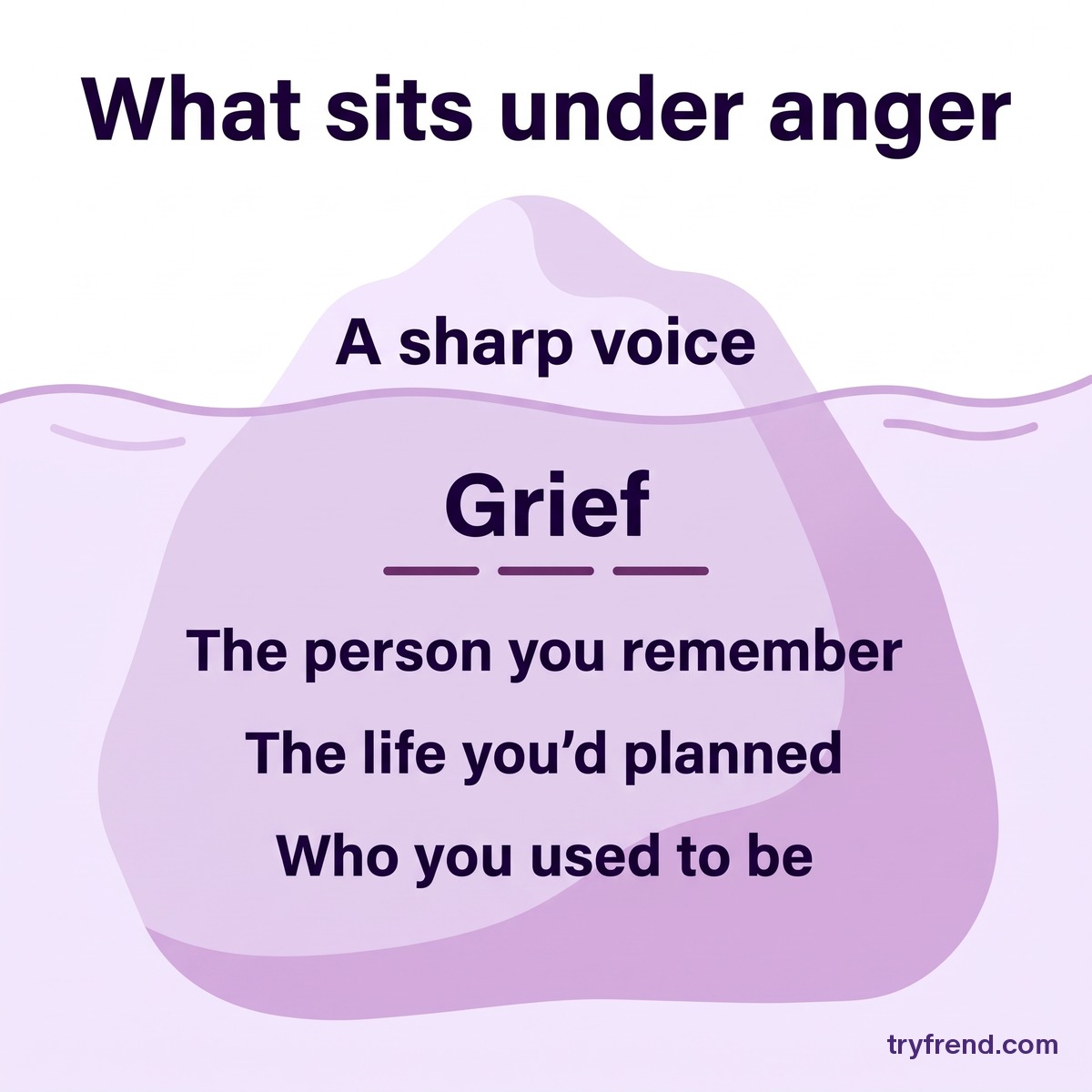
There's a difference between feeling angry and acting on it. The feeling is not something you chose. The shame you're carrying is often about the feeling itself, before you even did anything. Understanding where the anger comes from doesn't make every way of expressing it harmless.
The guilt after is its own thing, and I wrote about that separately, it's here.
You're not the only one sitting in this feeling. You're one of thousands doing it tonight, in kitchens and hallways and parked cars, wishing they could take it back.
People will want you to say it was all worth it, that it was rewarding. That pressure can outlast the caregiving itself.
This happens to sons and husbands too, and with cancer or a stroke as easily as with dementia, and 6:14pm is the same.


What do you say after you snap?
If she remembers the moment, or if she doesn't but you do, here's what helps.
Keep the apology short. "I'm sorry I snapped. That wasn't fair." Not "I'm a horrible person," not a ten-minute self-flagellation. Just the line, said plainly, looking at her.
Put a hand on her shoulder or ask if she wants tea, and sit down next to her for a minute. The getting back to steady is what repairs it.
If she's already forgotten (and with dementia, she probably has), the apology is still worth saying. It's for you as much as for her. It draws a line under the moment. It lets you stop carrying it into the next hour.
And then you move on. You have fourteen more hours in this day and she still needs you.
There's a longer version of this in the Field Guide, the little book that comes free with any Frend order.

How do you refill anything at all?
You can't pour from an empty cup. You've heard that one. It's true and it's also useless, because nobody's handing you a fill-up.
Sleep starts it. Perfect sleep is not on the table. What you actually need is one four-hour block back in your week. One night of respite, a friend who takes the monitor, earplugs and somebody else on call until morning. If the nights are the worst of it, I wrote about sleeping with one ear open, it's here.
The ask has to be one specific thing. Not "let me know if you need anything." One person, one task, one time. "Can you pick up her prescriptions Thursday?" People don't help because they don't know what to do. Tell them.
Caregiver support groups work when they work because you can say the sentence with no preamble and no defense. You can walk in and say "I snapped at her again" and the room already knows the rest.
Plenty of people sit in those rooms for months before they say the real thing, and it can start smaller, with reading something that knows what your week looks like or one sentence in a thread.
Go up the stairs twice or run cold water over your wrists. Physical discharge is real and it's ordinary advice.
When you're about to go back inside and you need sixty seconds first, sit in the car with the engine off and the door closed. Call it the Car Minute. It can be silence or it can be screaming.
Small breaks and breathing exercises can't supply what's actually missing, which is the money, the staffing and the institutional support that would make any of this sustainable. A few minutes in the car is not a solution to a system that left you holding this alone.
If the snapping is happening more than you can carry, there's a short set of questions here that can help you see where to start.
You're not the villain here
The snap happened. It'll probably happen again. That's not a moral failure. It's what running on empty sounds like.
Saying the true thing out loud is not the damage. Saying it is the part that makes tomorrow survivable. You're not the only person saying it tonight. You're in that room with them.
The part that says who you are is that you came looking for a way to do better.
Care resources
If you're feeling unsafe in your anger, or if you're afraid you might hurt yourself or someone else:
- 988 Suicide and Crisis Lifeline: call or text 988
- Caregiver Action Network Helpline: 1-855-227-3640
External citation: National Alliance for Caregiving and AARP, "Caregiving in the U.S. 2020": findings on caregiver stress and emotional strain available at aarp.org.
*These statements have not been evaluated by the Food and Drug Administration. This product is not intended to diagnose, treat, cure, or prevent any disease.
Keep reading
All articles
Next article
What Saffron Does (and Doesn't Do)
What saffron studies found on mood, sleep and next-day alertness. How much people took, for how long, and who shoul...
2 min read
Read
I Thought Resting Meant I Was Failing
The guilt goes off when you rest, when you ask for help, when you take an hour. It sounds like proof that you're fa...
6 min read
Read
When It's Somehow Only You
When siblings won't help with elderly parents: why the load lands on one person, which fights are winnable, and how...
7 min read
Read